
Mapping Regulatory Influences on Roulette App Development and Player Protection Measures in International Markets
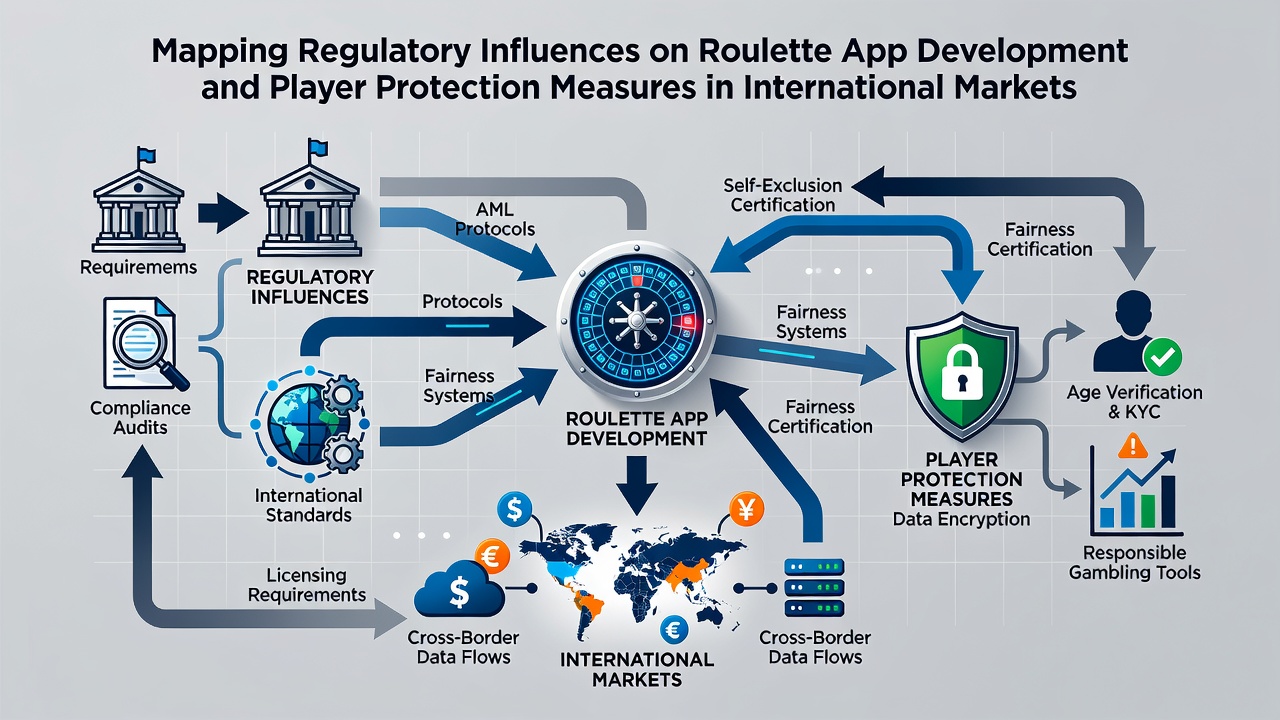
Regulatory environments shape how developers build roulette applications and embed player safeguards from the earliest coding stages through final deployment and ongoing updates.
Regional Regulatory Structures and Their Reach
European markets operate under directives that require strict licensing and technical standards for gambling software, while North American jurisdictions apply state-by-state or provincial rules that often demand separate compliance testing for each territory. Australian authorities enforce point-of-consumption taxes and mandatory responsible gambling modules, whereas several Asian regulatory bodies focus on restricting offshore access through payment gateways and app store controls. These frameworks overlap yet diverge in their technical requirements, forcing development teams to maintain multiple code branches and certification processes.
Data from industry reports show that developers allocate significant resources to legal review cycles before releasing new roulette features such as live dealer integration or bonus systems. One study tracking app releases between 2023 and 2025 found that products targeting multiple continents underwent an average of four distinct audit rounds to satisfy differing data protection and payout verification rules.
Player Protection Mechanisms Embedded in App Architecture
Most regulatory regimes mandate real-time monitoring tools that track betting patterns and trigger interventions when predefined thresholds are crossed. Age verification protocols rely on document scanning combined with database cross-checks, while self-exclusion lists synchronize across licensed operators through centralized registries. Deposit and loss limits appear as default settings in many jurisdictions, with users required to actively raise them after a cooling-off period.
Research indicates that apps incorporating these features at the design phase experience fewer post-launch modifications. Observers note that integration of geolocation services helps enforce territorial restrictions, particularly in markets where roulette apps face outright bans or heavy restrictions on advertising.
Development Adjustments Triggered by Compliance Demands
Teams building roulette applications frequently redesign user interfaces to accommodate mandatory warning messages and session timers that cannot be dismissed. Backend systems must log every transaction with immutable timestamps to support audit trails demanded by regulators in Canada and several EU member states. Payment processing modules require additional encryption layers and third-party certifications that vary by region.
According to figures released by the Australian Communications and Media Authority, operators updated their responsible gambling toolkits in preparation for expanded digital oversight measures scheduled for August 2026. These updates include enhanced reporting on player behavior analytics and automated alerts sent directly through the application rather than email alone. Developers therefore schedule feature freezes several months ahead of such deadlines to allow for final regulatory sign-off.
Cross-Border Challenges and Harmonization Efforts
Companies serving international audiences maintain separate legal entities and server locations to comply with data residency laws that affect how player information is stored and shared. While some organizations participate in voluntary codes of conduct promoted by gaming associations, mandatory rules still take precedence during licensing renewals. Trade groups have documented cases where a single app update triggered simultaneous reviews in three or more countries, extending time-to-market by weeks.
Academic papers examining regulatory convergence highlight that technical standards for random number generators and return-to-player calculations remain relatively consistent, yet notification requirements for changes to game mathematics differ sharply. This variation leads development studios to create modular codebases where protection features can be toggled on or off depending on the target market without rewriting core game logic.
Conclusion
Regulatory mapping continues to influence every layer of roulette app creation, from initial architecture choices through live operation and periodic upgrades. Protection measures evolve alongside these rules, producing standardized tools that nevertheless require localized implementation. As new deadlines approach in markets such as Australia in August 2026, development timelines and technical specifications will shift again to maintain compliance across borders.